
Raisa Kabir
New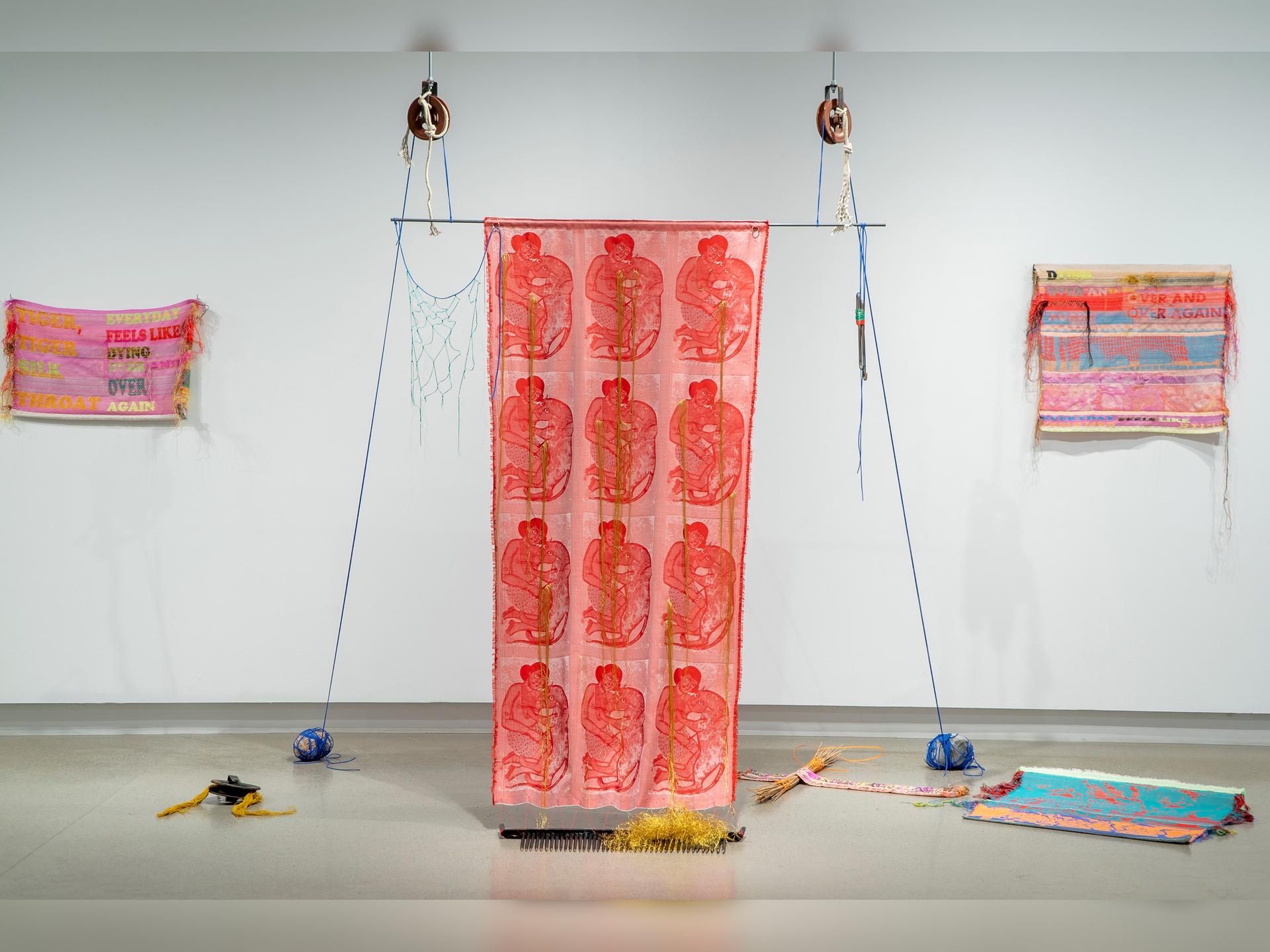
About
Opening 20 NovemberRaisa Kabir is an interdisciplinary artist and weaverWhose work utilises textiles, sculpture, video and performance to materialiseAnd explore…
Opening 20 NovemberRaisa Kabir is an interdisciplinary artist and weaverWhose work utilises textiles, sculpture, video and performance to materialiseAnd explore concepts relating to the cultural politics of cloth, textileArchives, and colonial geographies.In this newly commissioned solo exhibitionat Tramway, Kabir explores the intertwined textile legacies of Scotland andSouth Asia, responding to the cavernous scale of the venue with an ambitiousTheatrical installation comprising multiple textile and sculptural works.For Kabir, textile archives act as both the physical raw material andThe conceptual foundation of her work, which approaches archives asrepositories of global politics, migration, and colonial memory.
Throughher weaving and research, Kabir explores how Eastern, Central, and SouthAsian textile technologies directly shaped Western weaving knowledge andindustrial production.
By unpicking these material links, she exposes themigration, displacement, and industrial appropriation of ancient South AsianCraft traditions, and how patterns and designs have been claimed by nations.Reflecting on Glasgow’s legacy as a colonial merchant cityand trading port, the immersive, site-specific installation House of TheStolen Weavers features a series of new sculptures that simultaneouslyevoke loom architectures, maritime boats, ships and sails.
These works areSuspended, balanced, weighted or anchored across the space, evoking feelings ofTension, weight, precarity, balance and release.Kabir’s new large scale ‘loom-house-boat’ sculptures evokehybridised forms that move between shelter, vessel and weaving apparatus.
TwoLarge central sculptures combine the anatomy of a traditional hand loom withthe silhouettes of colonial sugar ships that once sailed the River Clydeas well as traditional Bangladeshi boats.
Multiple large-scale hand-woven andDigitally woven tapestries are suspended throughout the gallery, incorporatingmotifs and references to South Asian delta and flood maps.Elsewhere, KabirWorks with found objects, including coracles-woven circular boats which sheHas filled with Cotton, silk, indigoCochineal, jute and flax-bringing the materials and vessels of global textilehistories into the installation.
The coracles also feature in a new filmfeaturing a performance by Kabir projectedIn the space, extending the themes and material language of theInstallation.In this exhibition, Kabir continues their research into thetextile geographies of labour connecting Kashmiri woven shawls with thesilk-weaving industry in Paisley, Scotland.
The Buta, Boteh or Ambi designlater known as Paisley originated in the Kashmir region of India, and gainedprominence during the 18th and 19th centuries through the British East IndiaCompany’s trade.
As demand for Kashmir shawls increased, European manufacturersImitated and mass-produced the design using new technologies such as theJacquard loom.
This appropriation, together with colonial policies, led todeclining sales for Indian craftspeople and negatively affected the IndianTextile industry.Kabir’s work also explores the history of partition in SouthAsia and the intertwined textile heritages of centuries-old patterns that movedacross geographies before present-day borders existed.
These histories arefurther complicated by post-war migration from South Asia, which suppliedlabour to British textile factories in Scotland and Northern England.Across theexhibition, Kabir draws on these colonial histories to uncover the globalMobility of textile production and technology, whilst also celebrating the richcraft practices and traditions of the Bengal delta, including those of Kabir’sancestral land in Barisal.
Organiser
Tramway
Accommodation nearby
Available hotels and Airbnbs near Tramway